DETAIL ARTIKEL
Otomation industry
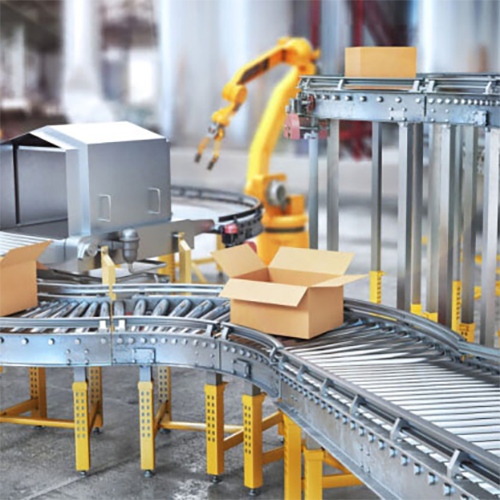
In today's developments where all work is required to be fast and efficient and produce quality goods. So business people like today are starting to compete on how to produce good and efficient products, one of which is automation technology. Initially, this automation technology was used to cut costs related to the use of human resources and production because it was able to work 24 hours a day, but now it is starting to shift to flexibility in the production process and improving quality.
For this reason, the author here wants to discuss what industrial automation is, what are its types and what are the benefits and disadvantages.
What is automation?
Automation is a technology related to the application of mechanical, electrical and computer-based information systems to operate and control production processes without human intervention.
What are the types of industrial automation?
There are three main types of industrial automation related to physical production and processes based on high-level digital transformation.
1. Fixed Automation Fixed automation
refers to a sequence of processes that are automatically carried out by the configuration of fixed equipment and rarely changes in operation.
Since this type of automation relies heavily on fixed systems, the initial investment and production rate is rather high. Furthermore, these processes are mostly based on physical automation and are used in continuous flow processes such as conveyors and mass car production systems that require very little manipulation.
2. Programmable Automation Programmable automation
is best designed for the various sequences that occur in batches. The order of operation and configuration of the machine can be changed by means of an electronic controller. It takes time to reprogram the machine and usually this automation is used in batch production processes. For each new batch, the production equipment can be reprogrammed for a different task.
This system is best for businesses that are constantly changing in the products they produce or the tasks they perform, be it business or customer-facing.
3.Flexible Automation (Flexible Automation) Reprogramming
systems are time-intensive and cost-intensive, therefore to limit product or process variations so that equipment replacement is easy to do, flexible automation is used.
Flexible automation in general is often applied to machines whose products change frequently and are controlled using a computer. For example, a CNC machine, the instruction code from the operator to the computer is unique for each particular job. Then based on the instruction code the machine will run according to the command given. So basically flexible automation is the development of Programmable Automation or automation that can be programmed.
Flexible automation is currently the most advanced form of the modern automation era. It is the ideal solution, whether a business uses automation to make the internal or user experience more efficient.
What Are the Benefits of Automation?
Atomization technology can bring a number of advantages to businesses as well as disadvantages, including:
Automation Advantages
- Time efficiency - automation of production machines will definitely speed up production time and have better repeatability and of course fewer human errors ).
- Improved accuracy and repeatability - Machines that have been programmed automatically can perform repeated commands with high accuracy
- Reduces errors - The error rate made by machines that have been programmed automatically will be relatively lower when compared to power man.
- Reduced costs - The use of automated machines can be used to reduce costs associated with employing labor (ie wages and benefits).
- Increased safety - Automated machines can be used to tackle tasks that are prone to injury and hazardous work.
- Increased production volume - The use of automated machines can be operated automatically for 24 hours a day and creates valuable resources for large production volumes and will certainly increase profits for the company.
Disadvantages of Automation
- Less flexible - Machines can only execute certain commands so there are some tasks that only humans can do.
- Pollution is increasing - Various types of machines that are operated usually use motors which may require gas or chemicals to operate. This can lead to increased pollution in the workplace.
- Costs Large initial investment - automatic machines are one of the most expensive costs for a company. The costs incurred by the company to get this automatic machine can reach millions to billions depending on the type and level of automation.
- Unemployment increases - With automatic machines the need for labor is reduced so that it can increase the number of unemployed.
- There are unexpected costs - There may be some unforeseen costs that must be incurred in maintaining the automation machine. This could include research and development costs, preventive maintenance costs and employee training costs to operate the automated machines.